The Side Effects Mayim Bialik Described Are the Same Thing Curing Addiction
Science ?? Comments Mon 08 June 2026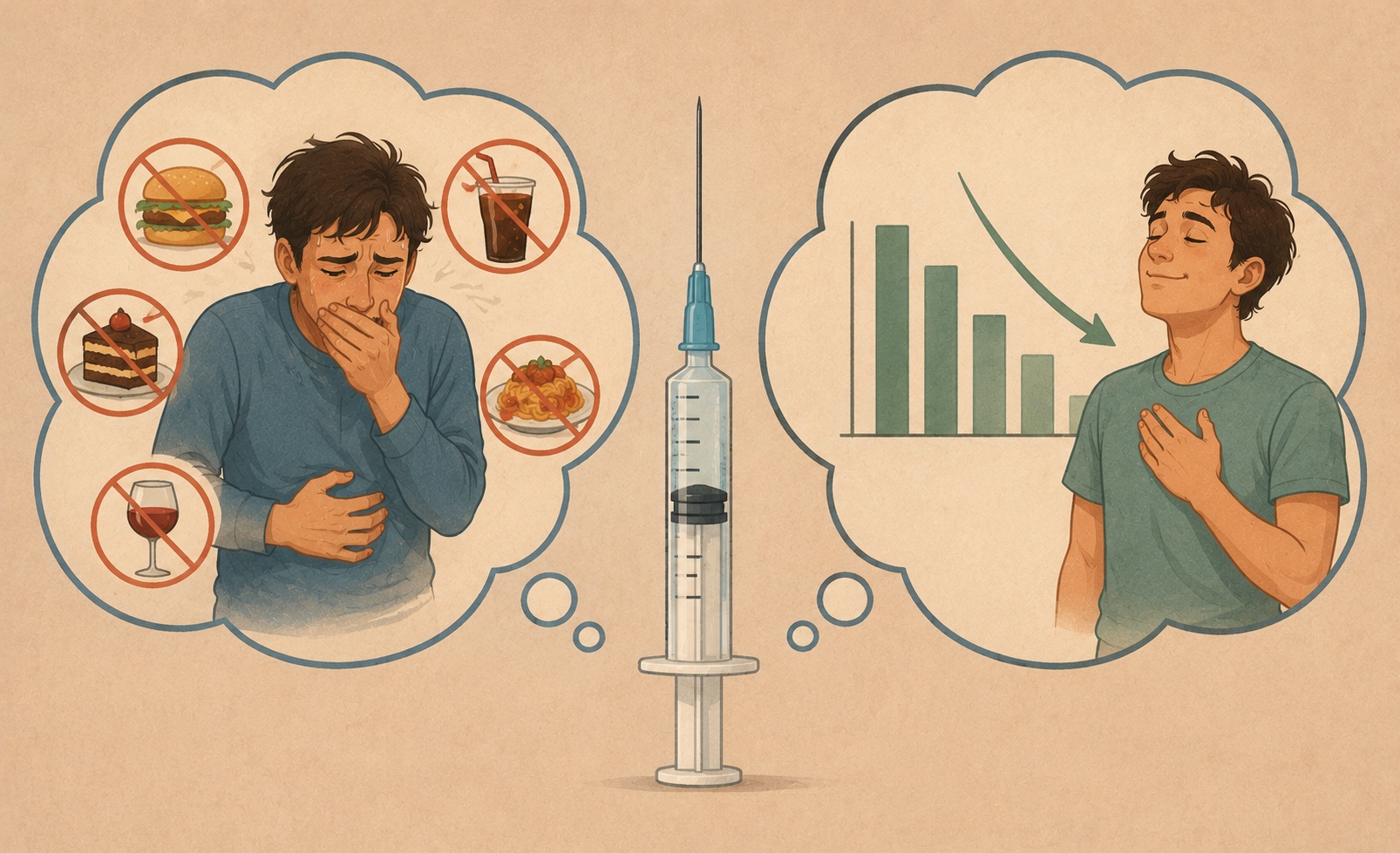
💉 🤢 🍷 🚬 💊 📉 🧠 ✅
TL;DR: Researchers analyzed 606,434 veterans and confirmed that GLP-1 drugs reduce addiction risk across every major substance by silencing the biology of craving — which is also the mechanism Mayim Bialik publicly described as making her feel terrible after one injection.
The Situation
The BuzzFeed article spread quickly because the headline did its job: Mayim Bialik, trying a single GLP-1 injection, experienced side effects severe enough to constitute a story. The nausea, the aversion, the feeling of wanting nothing — these are the complaints that circulate whenever someone in the public eye has a notable reaction to Ozempic or its relatives, and they have been circulating frequently. GLP-1 discourse is in a sustained viral state across TikTok, X, and celebrity media, and every new report of an extreme response adds another layer.
Washington University School of Medicine in St. Louis was not studying celebrity wellness decisions. They were analyzing the electronic health records of 606,434 U.S. veterans with type 2 diabetes, divided into those who started GLP-1 medications and those who started a different class of diabetes drug. Among the 524,817 who had no substance use disorder at the start of the study, those taking GLP-1 medications were significantly less likely to develop one. The risk reduction held across every major category: alcohol (18% lower), cannabis (14%), cocaine (20%), nicotine (20%), and opioids (25%). For the 81,617 who already had an active substance use disorder, GLP-1 use was associated with a 40% reduction in overdoses and a 50% reduction in drug-related deaths over three years.
The researchers published in The BMJ and concluded that the mechanism was not substance-specific. GLP-1 receptors are present in the brain's reward processing regions, and the drugs appear to act on what senior author Ziyad Al-Aly described as "drug noise" — the shared biological craving that underlies addiction across different substances simultaneously. The aversion to food that patients describe as "food noise going quiet" is, the study suggests, the same circuit that normally amplifies cravings for alcohol, nicotine, and opioids. The drug does not distinguish between them.
By the Numbers
| Outcome | Result | Population |
|---|---|---|
| Lower risk of any new substance use disorder | 14% | 524,817 veterans without existing SUD |
| Lower risk of opioid use disorder | 25% | Same group |
| Lower risk of cocaine use disorder | 20% | Same group |
| Lower risk of alcohol use disorder | 18% | Same group |
| Reduction in overdose events | 40% | 81,617 veterans with existing SUD |
| Reduction in drug-related deaths | 50% | Same group |
| Estimated new SUDs prevented per 1,000 GLP-1 users | 7 | Full study population |
The Deeper Question Nobody Asked
The side effects Mayim Bialik described — the nausea, the total loss of appetite, the vague aversion to everything desirable — are, per the WashU data, exactly what 40% fewer overdoses and 50% fewer drug-related deaths feel like from the inside: the craving circuit being dampened across every category at once. What presents to the individual as an unpleasant afternoon is, at the population scale, a measurable reduction in addiction mortality. The experience of the side effect and the mechanism of the therapeutic benefit are not two separate things — they are the same quieting, which raises a reasonable question about whether "unbearable" is the correct word for what is also, technically, the most broadly effective anti-addiction signal ever documented in a study of 600,000 people.
Sources
- Popular GLP-1 weight-loss drugs linked to lower risks of addiction and overdose — ScienceDaily / WashU Medicine, June 3 2026 — analysis of 606,434 veterans showing GLP-1 drugs cut addiction risk across all major substances
- Metabolic medicines and addiction: what GLP-1 receptor agonists might add to substance use care — Qeadan et al., The BMJ 392: s325, 2026 — original peer-reviewed paper
Tags: ozempic glp-1 addiction cravings side-effects