Gen Z Women Don't Want to Get Married. Science Has a Theory About Why They're So Tired.
Wellness ?? Comments Mon 08 June 2026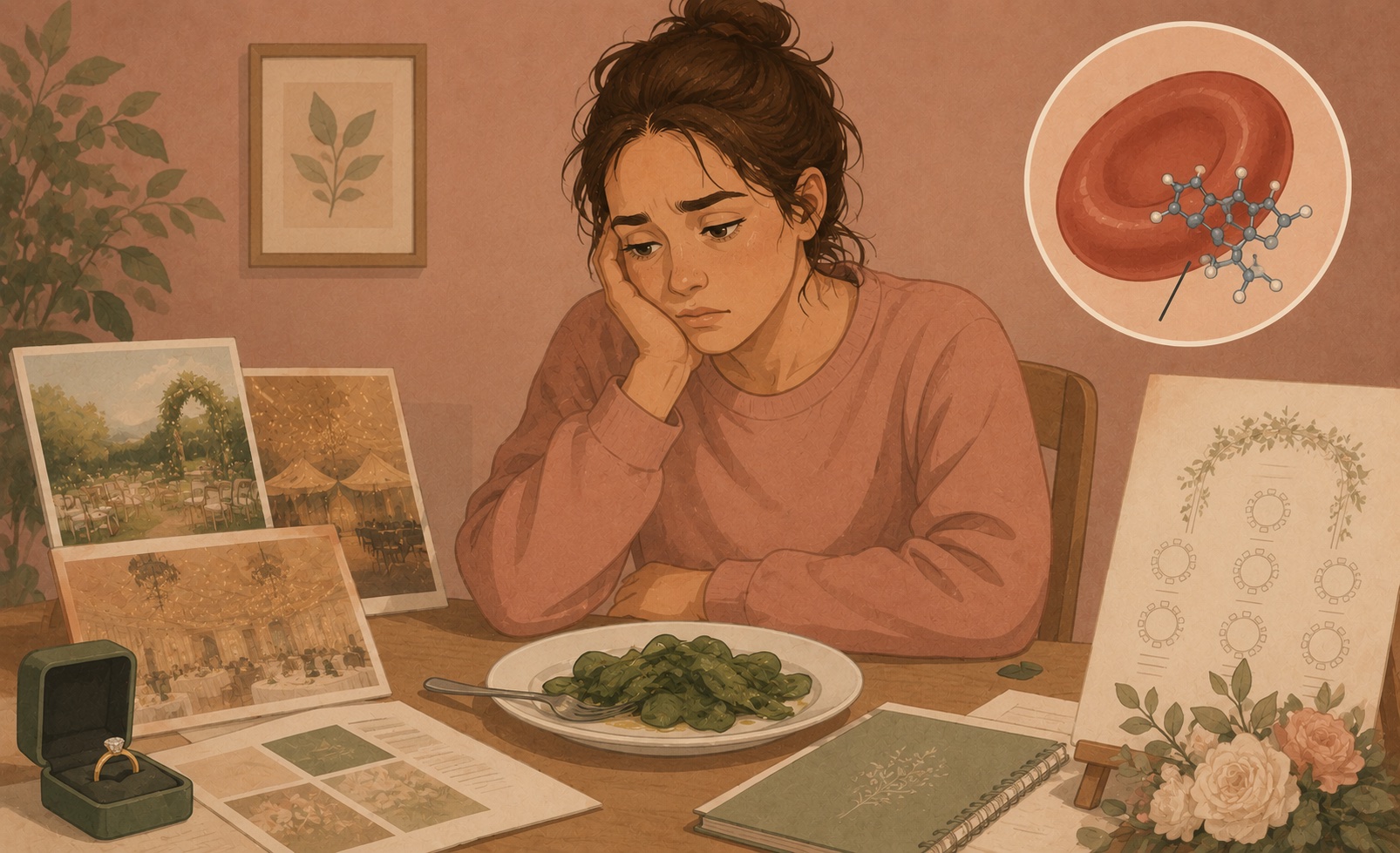
💍 ❌ 😴 🥗 🩸 📉 💡 🚫
TL;DR: Science found the nutritional mechanism that specifically drains women's motivation — and Gen Z had already described it in detail in three years of marriage-rejection discourse.
The Situation
The essay went viral the way these essays always do — shared until it became a consensus, then debated until it became a trend. "Gen Z Women Don't Want To Get Married Anymore" has circulated across BuzzFeed, TikTok, and Reddit in multiple iterations this year, each generating hundreds of thousands of engagements and the same core of responses: too much labour, too little reciprocity, too many logistics, and — most consistently — an overwhelming exhaustion that made the entire project feel impossible before it started.
Researchers at Osaka Metropolitan University's Graduate School of Human Life and Ecology were not studying marriage. They were studying homocysteine. Homocysteine is a compound that accumulates in the blood when levels of vitamin B12 and folate are too low to metabolise it properly — it is a standard biochemical marker for these deficiencies, and it rises in anyone not consuming adequate amounts of both. Professor Hiroaki Kanouchi's team enrolled around 600 healthy Japanese adults and measured their blood levels of homocysteine, folate, and vitamin B12 alongside self-reported fatigue and motivation on two validated scales. They then analysed men and women separately, controlling for age, sleep duration, workload, and eating habits.
The results, published in Nutrients in May 2026, split cleanly by sex. Men with elevated homocysteine levels reported significantly greater physical fatigue. Women with elevated homocysteine levels reported something different: not primarily physical fatigue, but a marked decline in motivation. The sensation of being unable to generate the willingness to begin. The researchers noted this was likely the first study of its kind to document this link in otherwise healthy adults — suggesting a mechanism that had been operating quietly beneath the threshold of clinical diagnosis for some time.
By the Numbers
| Finding | Result | Source |
|---|---|---|
| Study population | ~600 healthy Japanese adults | Osaka Metropolitan University / Nutrients, 2026 |
| Women with elevated homocysteine | Reported significantly lower motivation | Kanouchi et al., 2026 |
| Men with elevated homocysteine | Reported greater physical fatigue | Kanouchi et al., 2026 |
| Cause of homocysteine elevation | Low vitamin B12 and/or folate intake | Standard biochemistry |
| Researchers' description | "The first report of its kind" linking B12/folate to fatigue in healthy individuals | Nutrients, 2026 |
The Deeper Question Nobody Asked
The Gen Z marriage-rejection discourse has always described exhaustion as the main barrier: not a dislike of partnership, but an absence of the energy required to sustain its administrative overhead — the planning, the communication, the division of labour negotiation, the co-pay for the couples therapist neither party has found yet. What the Osaka study identified was a nutritional mechanism that specifically depletes motivation in women independently of sleep, workload, or stress, which makes it technically possible that part of the generation-wide retreat from matrimony is biochemical in origin — a suggestion that is almost certainly too reductive, and almost certainly going to appear in a wellness TikTok within forty-eight hours regardless. The question this leaves open is whether "eat more leafy greens and B12-fortified cereal" constitutes actionable relationship advice, and whether any woman who has already cancelled wedding planning twice due to exhaustion is in the right motivational state to act on it.
Sources
- Vitamin B12 and folate deficiencies linked to chronic fatigue — ScienceDaily / Osaka Metropolitan University, May 28 2026 — study of ~600 healthy adults finding elevated homocysteine linked to lower motivation in women
- Associations of Plasma Homocysteine Reflecting Vitamin B12 and Folate Status with Fatigue-Related Outcomes in Healthy Adults — Kanouchi et al., Nutrients 18(6): 941, 2026 — original peer-reviewed paper
Tags: gen-z marriage vitamin-b12 fatigue women